Work in this order. Find where the cold gets in, seal the gaps with caulk and weatherstripping, add a layer over the glass with film or an insert, then finish with a heavy window treatment. Most of these steps cost $10 to $40 per window and take under an hour. The U.S. Department of Energy estimates that windows account for 25% to 30% of residential heating and cooling energy use, so the work pays back the same winter.
Window Insulation Methods Compared
Each method addresses a different problem, and most homes require two or three of them in combination. The table shows what each one costs, how long it takes, and whether it can be removed in spring.
Method | What it fixes | Cost per window | Time | Reversible | Renter-friendly |
Caulk at fixed joints | Air leaking around the frame and trim | $5 to $10 | 20 to 30 min | No | Ask first |
Weatherstripping | Air leaking where the sash moves | $8 to $15 | 30 min | Yes | Yes |
Rope caulk | Seasonal gaps at the sash meeting rail | $3 to $6 | 10 min | Yes | Yes |
Sash lock adjustment | Loose sashes that do not pull tight | $0 to $15 | 10 min | Yes | Yes |
Shrink window film | Cold air movement at the glass | $3 to $8 | 20 min | Yes | Yes |
Bubble wrap | Cold glass in a room where view does not matter | $1 to $3 | 10 min | Yes | Yes |
Interior insert panel | Cold glass and noise, keeps the view | $200 to $400 | 15 min | Yes | Yes |
Exterior or interior storm window | Cold glass on single-pane windows | $100 to $350 | Pro install | Semi | No |
Cellular or thermal shades | Heat lost through the glass at night | $40 to $150 | 30 min | Yes | Usually |
Draft snake at the sill | Air spilling from the bottom of the sash | $10 to $25 | None | Yes | Yes |
Prices are typical retail ranges for 2026 and vary with window size and region.
First, Find Out Where the Cold Comes In
Two separate problems feel identical to anyone sitting near the window. Air leaking through gaps is infiltration, and cold radiating off the glass surface is conduction. Sealing corrects the first, an additional layer corrects the second, and treating the wrong one wastes the effort entirely.
Air Leaks Around the Sash and Frame
Older double-hung windows leak where the two sashes meet, where the sash slides against the jamb, and at the joint between the frame and the wall. Outside, gaps open where caulk has cracked away from the siding or brick. These leaks bring in outdoor air directly, which is why the room feels drafty rather than just cool.
Cold Radiating Through the Glass
A single pane of glass can sit near the outdoor temperature on a cold night. The chill you feel standing near a sealed window comes from that cold surface pulling heat from your body and from the room air. No amount of caulk changes it, because nothing is leaking. This problem needs another layer of air between you and the glass.
Simple Ways to Test a Window
Run the back of your hand slowly around the sash and the frame on a cold, windy day, since skin detects moving air better than still cold. A thin ribbon or tissue held near the edges shows the same thing visually. For a clearer picture, close the window on a dollar bill and pull it out: if it slides free easily, the seal is not tight. Many phones can also pair with a small thermal camera, which shows cold lines at the exact gaps.
Sealing Windows for Winter
Sealing is the core of how to winterize windows, and it comes first because every layer you add afterward works better over a tight window. The best way to seal windows for winter depends on one question: does that part of the window move?
Caulk the Fixed Joints
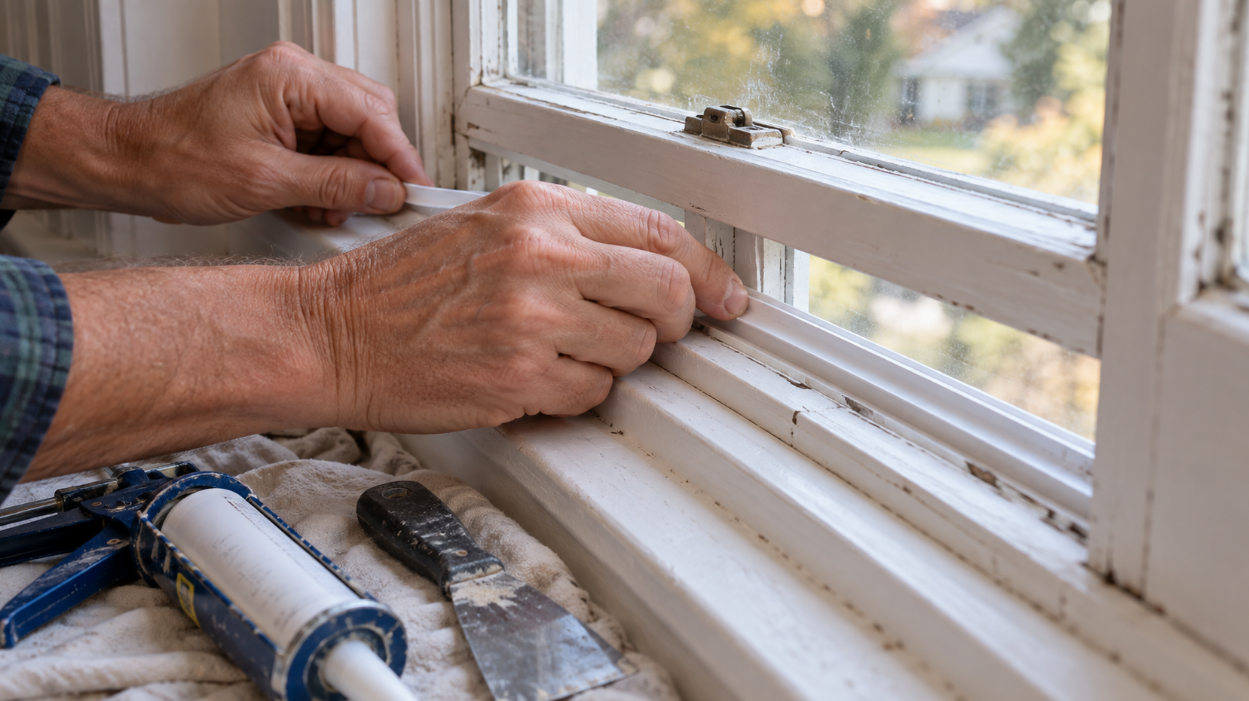
Use caulk on joints that never move, such as the frame-to-wall seam, the trim edges and the glazing line where the glass meets the sash. Remove old, cracked caulk with a putty knife, wipe the surface clean and dry, then lay a continuous bead and tool it smooth with a wet finger. Exterior work needs an exterior-grade silicone or siliconized latex, applied above roughly 40°F. Leave the small weep holes along the bottom of the exterior frame open, because they drain water out of the window.
Weatherstrip the Moving Sash
Moving parts require weatherstripping rather than caulk. V-seal strips fold into a spring and work well along the sash channels of double-hung windows. Adhesive foam tape suits uneven surfaces and the meeting rail. Felt is the cheapest and the shortest-lived. Clean the surface with rubbing alcohol before applying adhesive strips, since dust is the usual reason they fall off in January.
Rope Caulk and Temporary Seals
Rope caulk is a putty-like strip you press into gaps by hand and peel off in spring, leaving no residue. It suits windows you will not open until warm weather, especially the seam where the upper and lower sashes meet. For a window you still need to open, keep the rope caulk on the perimeter and leave the sash free.
Lock the Sash
Closing the lock on a double-hung window pulls the two sashes together and compresses the weatherstripping between them. A lock that no longer reaches usually means the hardware has shifted, and repositioning it with a screwdriver takes minutes. This is the one step that costs nothing.
Add a Layer Over the Glass
Once the gaps are closed, the next improvement comes from trapping still air against the glass surface. Still air is a good insulator, and each of these options creates a pocket of it.
Shrink Window Film
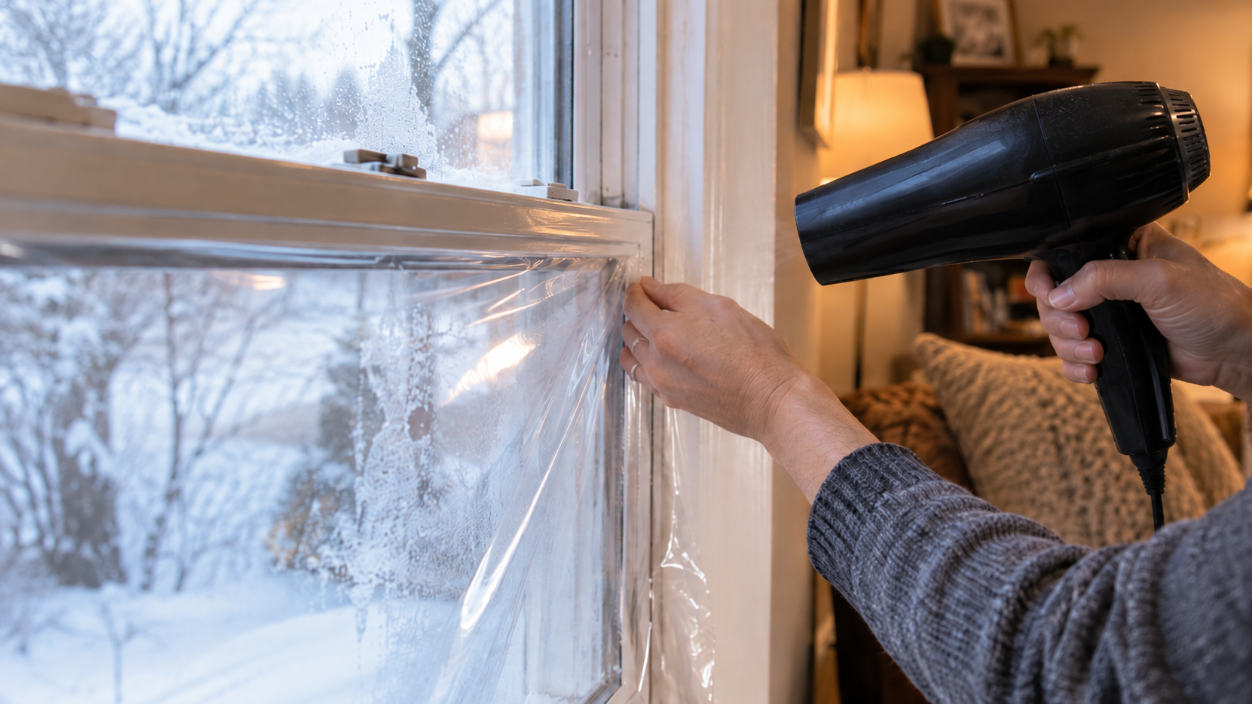
Plastic for windows for winter usually comes as a shrink film kit with double-sided tape, and one $10 to $20 kit covers three to five average windows. Tape the perimeter of the frame, press the film onto the tape, then shrink it tight with a hair dryer until the wrinkles disappear. A taut, invisible sheet performs better than a loose one, and the trapped air pocket does most of the work. Apply film on a dry day in a warm room, and test the tape on a small spot first if the trim has old paint.
Interior Insert Panels
Insert panels are rigid acrylic sheets in a compression frame that press into the window opening and pull out by hand. They cost far more than film, usually $200 to $400 per window, and they keep the view clear, cut street noise and can stay in year-round. For historic homes where replacement windows are restricted, they are often the only real upgrade available.
Bubble Wrap
Bubble wrap works as a cheap version of film. Mist the glass with water, press the bubble side against it, and the sheet stays put for months without tape. It blocks the view completely, which makes it practical for basements, garages, attic windows and north-facing rooms nobody sits in.
Storm Windows
Storm windows add a full second layer outside or inside the existing sash. Low-emissivity storm windows are the strongest option short of replacement, and the Department of Energy reports heating and cooling savings of roughly 10% to 30% on single-pane homes. Interior storm panels install without touching the exterior, which matters in historic districts. If your windows are already double-pane and sealed, skip this step and compare the numbers on energy-efficient windows instead.
Window Treatments That Hold Heat In

A curtain slows heat loss only when it blocks the air path between the room and the cold glass. Air that slips over the top or around the sides carries heat with it, which is why an expensive curtain hung loosely does almost nothing.
Cellular shades, also called honeycomb shades, trap air in their cells and fit close to the frame. The Department of Energy credits well-fitted cellular shades with reducing heat loss through windows by up to about 40%. Thermal curtains with a dense lining accomplish similar results under three conditions. The rod extends past the window on both sides, the panels reach the floor, and a valance or wrap-around rod closes off the top.
Two habits add to the effect. Open the curtains on south-facing windows during sunny hours to collect free heat, and close every curtain at dusk, when the glass loses the most heat. A draft snake laid along the sill catches the cold air that spills off the bottom of the sash.
When Temporary Fixes Stop Being Worth It
Seasonal measures deliver real comfort, though their usefulness has a limit. Some windows fail in ways that no film or weatherstrip can correct.
Fog or moisture between the panes means the seal of the insulated glass unit has failed, and the insulating gas is gone. Rot in the sash or sill, a sash that no longer closes square, and frames that have been painted shut are structural problems. In those cases, the money spent on film, rope caulk and shades every autumn simply repeats each year without fixing anything.
The math is straightforward. Sealing supplies for a dozen windows run $150 to $300 per winter, and the work takes a weekend each time. When windows are single-pane, rotted or fogged, window replacement ends the annual routine and lowers heating bills at the same time.
Frequently Asked Questions
Short answers to the questions homeowners ask most often before the first cold snap.
What is the cheapest way to insulate windows for winter?
Rope caulk and bubble wrap cost the least, usually a few dollars per window, and both peel off in spring. Tightening the sash locks and closing existing curtains at dusk cost nothing at all. A shrink film kit at $10 to $20 for several windows gives the most improvement per dollar.
Does bubble wrap on windows actually work?
Yes, for the glass itself. The bubbles hold pockets of still air against the pane and cut the chill you feel from a cold window. It does nothing for air leaking around the sash, and it blocks the view, so it suits rooms where light matters more than a clear window.
Should plastic window film go on the inside or the outside?
Inside, on the frame around the glass. Interior film stays dry, holds its adhesive tape and creates a sealed air pocket. Exterior film is exposed to wind, rain and ultraviolet light and usually fails within one season.
When should I insulate my windows in the fall?
Late October in Pennsylvania and New Jersey, while daytime temperatures are still above 50°F. Caulk and adhesive tape cure poorly in the cold, and dry weather makes film and tape stick better. Waiting until the first freeze means working in conditions that shorten the life of every material.
Will window film or tape damage my window frames?
Most kits release cleanly from sound paint and vinyl. Old, brittle or lead-era paint can lift with the tape, so test a small area first and pull the tape off slowly at a low angle. Rope caulk and compression insert panels avoid adhesive entirely.
Do thermal curtains really lower heating bills?
They help when they seal the opening, and they do little when they hang loose. Panels should reach the floor, extend past the frame on both sides and close off at the top. Cellular shades fitted inside the frame generally outperform curtains.
Where to Start This Week
Start with the free steps: lock every sash, close the curtains at dusk and run your hand around each frame to find the leaks. Then buy caulk, a roll of V-seal and one film kit, and treat the two or three windows that feel worst. Do the work in dry weather above 50°F and leave the weep holes open. Keeping indoor humidity near 30% to 40% prevents moisture from collecting behind the film. For windows that fog, stick or rot, plan a conversation about replacement windows rather than another season of patches.

Comments