
Most homes need gutter cleaning twice a year, once in late spring and once in late fall after the leaves drop. Homes with deciduous trees hanging over the roof usually need three or four cleanings a year, and homes near pine trees need one every three months. Gutters with guards still need an inspection at least once a year, and every system should be checked after a major storm.
The exact number depends on the vegetation surrounding the property, the way the roof drains, and the annual precipitation in your region. The sections below show how to match the schedule to your home.
How Often Should Gutters Be Cleaned?
Gutters should be cleaned as frequently as necessary to keep rainwater flowing into the downspouts instead of overflowing the front edge. For an average house, that means two cleanings a year. The table shows how the number changes with the conditions around the home.
Situation | Cleanings per year | Best timing |
Open lot, no trees within 30 feet of the roof | 1 to 2 | Late fall, plus a spring check |
A few trees nearby, none over the roof | 2 | Late spring and late fall |
Oaks, maples or other deciduous trees overhanging the roof | 3 to 4 | Spring, early fall, late fall, winter check |
Pines or other conifers near the house | 4 (every 3 months) | Once per season |
Area with frequent storms or nor’easters | 2, plus a check after each major storm | Late spring, late fall, after storms |
Gutters with guards or covers | 1 inspection, cleaning as needed | Late fall |
Treat the twice-a-year rule as a starting point. A house on a wooded lot in Bucks County can fill its gutters during three weeks of October. A house in a newer development with young landscaping may go a full year with only dust and shingle granules accumulating in the troughs.
What Changes Your Gutter Cleaning Schedule
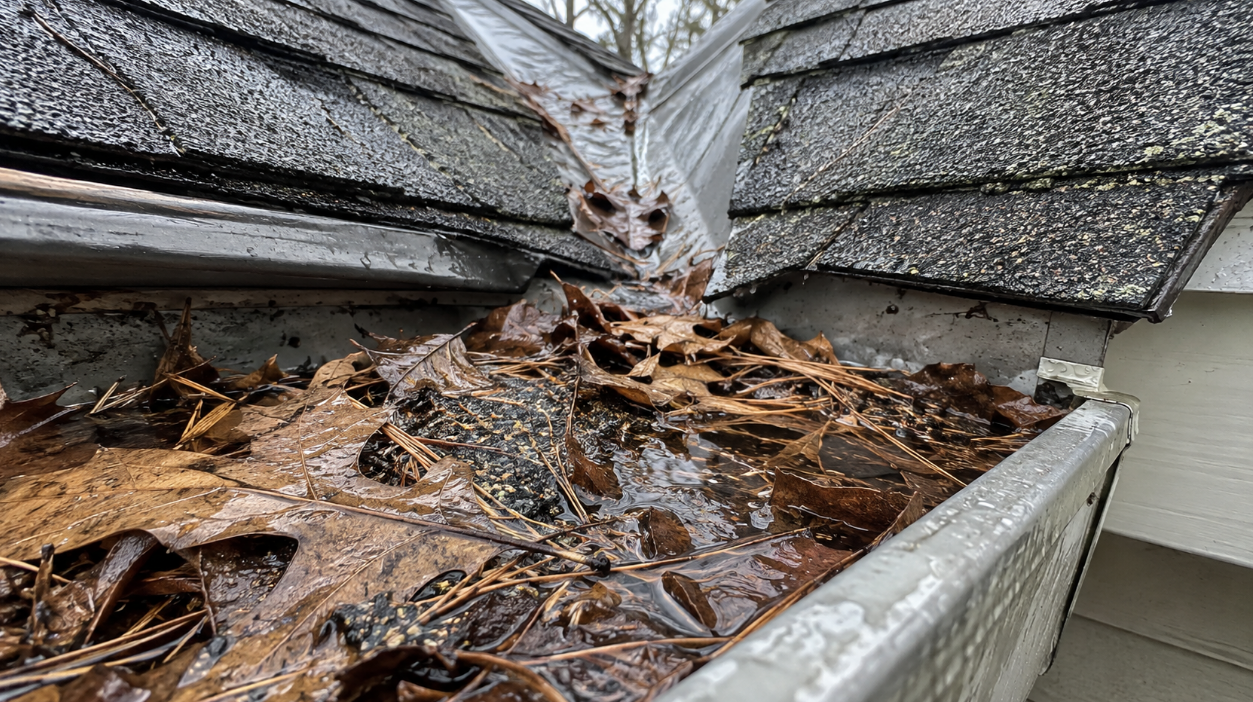
Four factors determine how quickly debris accumulates: nearby trees, roof geometry, regional weather, and gutter and downspout capacity. Each one can move the schedule up or down by one or two cleanings a year.
Tree Type and Distance From the Roof
Surrounding trees have the greatest influence on cleaning frequency. A branch that hangs over the roofline drops leaves, twigs, and seeds straight into the gutter. A tree 40 feet away sends most of its leaves to the lawn unless the wind carries them toward the house.
Different species contribute different kinds of debris. Oaks and maples drop a heavy load of broad leaves in October and November, plus seed pods and tassels in spring. Pines and spruces shed needles all year, and the needles slip through many gutter guards and pack into downspout openings. For this reason, homes under conifers need quarterly cleaning even when the fall leaf drop looks light.
Roof Size, Pitch, and Valleys
A larger roof collects more debris and delivers more water into each individual gutter run. Roof valleys, where two slopes meet, act like funnels and push leaves and granules into one short section of gutter, which often clogs first. Steep slopes also shed debris faster than a low porch roof does.
Local Weather and Storms
Heavy rainfall can relocate an entire season of loose debris from the roof surface into the gutters within a single afternoon. In Pennsylvania and New Jersey, spring thunderstorms, late-summer tropical rain, and winter nor’easters all bring that kind of downpour. After any storm with strong wind, a quick look at the gutters and downspouts shows whether a branch or a pile of leaves is blocking the flow.
Colder climates provide another reason to complete cleaning before winter. Wet leaves left in a gutter freeze into a solid plug, meltwater backs up behind it, and ice builds along the roof edge.
Downspout Size and Gutter Profile
Standard 5-inch K-style gutters with 2×3-inch downspouts clog sooner than 6-inch gutters with 3×4-inch downspouts, because a single handful of leaves can block the smaller outlet. Seamless gutters have fewer joints where debris can catch. If a home needs more than four cleanings a year, larger downspouts or a wider gutter can reduce the workload.
Best Time of Year to Clean Gutters
Timing matters as much as frequency. A cleaning completed two weeks before the heaviest leaf drop accomplishes very little, so each session should follow the particular debris season it is intended to clear.
Late Fall, After the Leaves Drop
The fall cleaning works best after most leaves have come down, which in Pennsylvania and New Jersey usually means mid to late November. Cleaning in September or early October leaves the gutters open to the main leaf drop that follows. Homes surrounded by oaks may need a second visit in December, since oaks hold part of their leaves longer than maples.
This cleaning also prepares the drainage system for winter conditions. Clear troughs let snowmelt drain away instead of refreezing along the eaves.
Spring, After Seeds and Pollen
The spring cleaning removes what winter storms left behind, along with everything trees release in April and May. Typical spring debris includes maple seeds, oak tassels, catkins and pollen that settles into a fine sludge. Late April to early June works in most of the northern half of the country. Scheduling it after the seed drop saves a second cleanup a few weeks later.
Summer and Winter Checks
Summer and winter visits are generally quick inspections rather than complete cleanings. Before hurricane season peaks in August and September, a check confirms the downspouts are open. In winter, a look from the ground after a thaw shows whether water drains away or freezes at the gutter edge.
Signs Your Gutters Need Cleaning Before the Next Scheduled Date
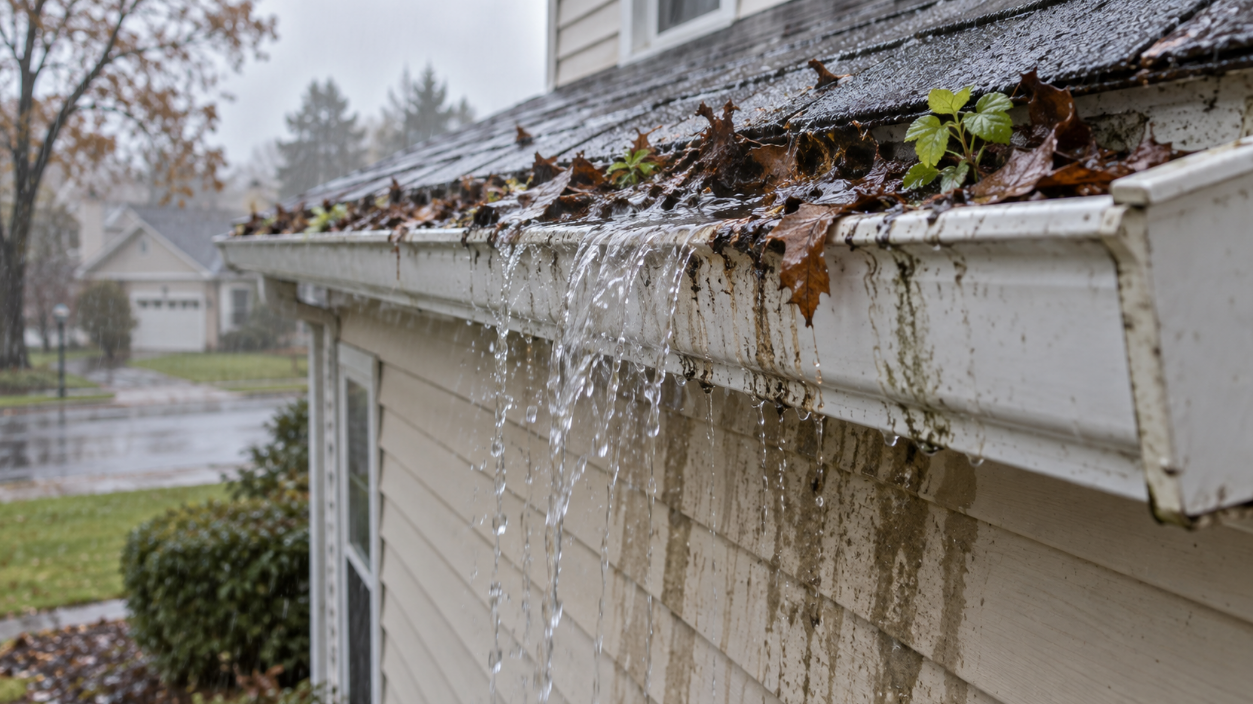
Water spilling over the front edge of a gutter during steady rain means the trough or the downspout below it can no longer carry the flow. This is the clearest signal, and it usually shows up at the section below a roof valley or under an overhanging branch first.
Some signs appear between storms. Seedlings or small plants growing along the gutter line mean that leaves have broken down into a soil-like layer over several months. Sagging sections, or gutters that have started to pull away from the fascia, point to the same problem from a different angle: wet debris and standing water have added more weight than the hangers can hold.
The siding and the ground below also carry evidence. Dark stripes or stains running down the wall under the gutter are left by repeated overflow. Pooling water or soil washing out along the foundation shows that roof water now lands next to the house instead of leaving through the downspouts.
A downspout that stays dry during a rain has a blockage at the outlet or inside an elbow.
Birds, wasps and rodents also read clogged gutters as a nesting spot, so regular activity along the roofline often means packed debris is sitting there.
Leaves visible above the gutter lip are a less reliable indicator. A few loose leaves can rest on top while water still runs freely underneath, so watching the gutters during an actual rainstorm tells you more than any look from the ground on a dry day.
What Happens When Gutters Go Too Long Without Cleaning
A clogged gutter holds water and debris right at the roof edge. A 10-foot section full of standing water and wet leaves can weigh roughly 100 pounds, and that weight, combined with constant moisture, damages the house in several places at once.
Fascia and Roof Deck Rot
Water that sits in a blocked gutter soaks into the fascia board behind it and the edge of the roof deck above. The wood softens over one or two wet seasons, and the hangers that hold the gutter start to lose their grip.
Sagging and Detached Gutters
Once hangers pull out of wet wood, gutter sections tilt away from the house. Water then drains backward toward the low spot instead of reaching the downspout, which adds more weight to the weakest section and speeds up the failure.
Foundation and Basement Water
Overflow from a clogged gutter falls straight down next to the house. The soil along the foundation stays saturated, and water finds its way through cracks in basement walls and around window wells.
Ice Dams in Winter
Leaves and needles left in the gutter freeze into a solid plug. Meltwater from the roof backs up behind it, refreezes along the eaves, and can work its way under the lower rows of shingles into the attic.
Pests
Standing water in a gutter breeds mosquitoes within a week or two of warm weather. Packed debris also gives birds, wasps, and rodents a sheltered place to nest right against the roofline.
Each of these problems costs far more to repair than a cleaning. When gutters already sag, leak at the seams or hang from rotted fascia, cleaning will not fix them, and the system may need gutter repair or replacement.
How to Build a Gutter Cleaning Schedule for Your Home
Homeowners asking “How often should I clean my gutters?” get the most reliable answer from their own records. Documenting the debris at each cleaning, then adjusting, produces a schedule specific to the property. General recommendations provide a starting point. The amount you actually pull out shows what your roof and trees produce.
- Start with two cleanings: one in late spring and one in late fall after the leaves drop.
- At each cleaning, note how full the gutters were: under a quarter, about half, or packed to the top. A phone photo works as a record.
- Note where the debris collected. Sections below valleys or overhanging branches often fill first and may need extra attention.
- Adjust the next year. If the spring cleaning found little, replace it with an inspection. If both cleanings found packed gutters, add a third in early fall, or switch to quarterly visits under conifers.
- Add a check after every storm with strong wind, whatever the calendar says.
After one or two years of documentation, the schedule accurately reflects the property. Neighboring houses can end up with very different schedules. A home with a large silver maple above the garage may need four cleanings, while the house next door with an open yard may need only one.
Do Gutter Guards Reduce How Often You Clean?
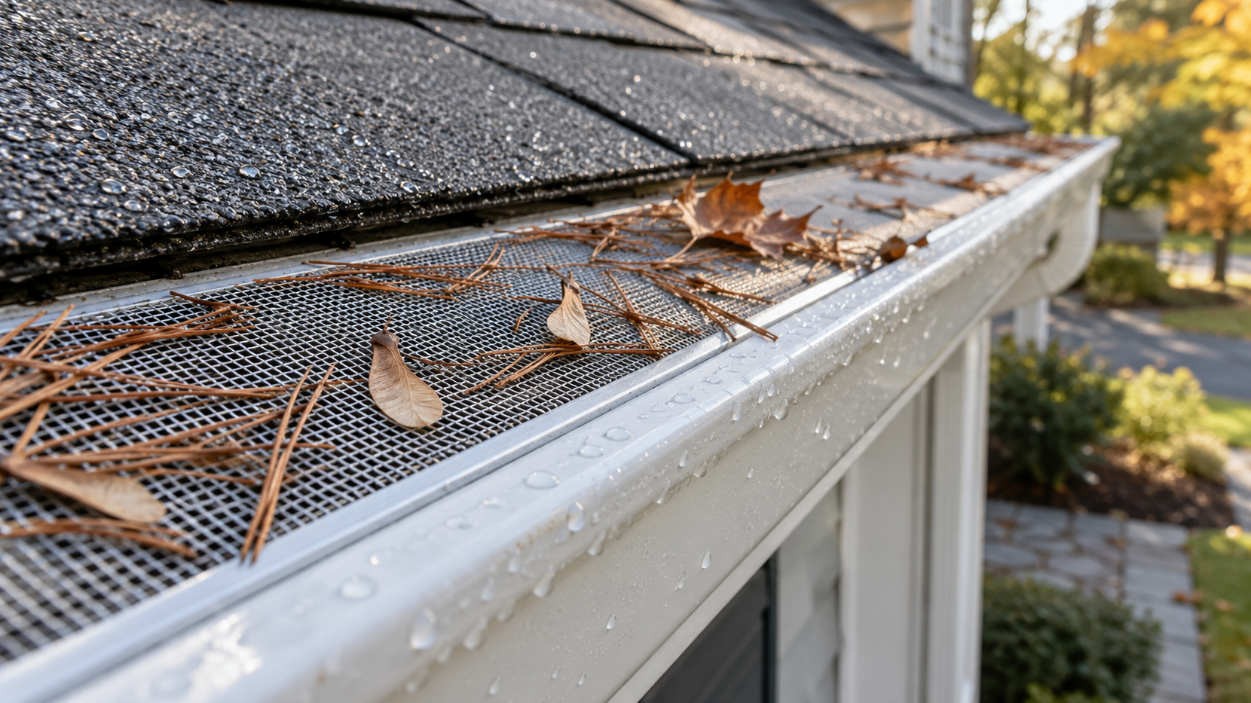
Gutter guards cut cleaning frequency for most homes, often from two or more cleanings a year to one inspection with occasional rinsing. They keep leaves and larger debris out of the trough, although some material still gets through or collects on top.
Pine needles, shingle granules, pollen and seed pods can slip through screens or mat down on micro-mesh surfaces, where they stop water from entering the gutter. Guarded gutters therefore need an inspection at least once a year, usually in late fall. Brush or rinse the guard surface whenever debris accumulates on it.
The guard design determines how much remaining maintenance is required. Micro-mesh guards block the smallest particles and mainly need their surface cleared. Reverse-curve covers shed leaves well in steady rain, yet water can overshoot them in heavy downpours. Basic screens and foam inserts cost less and tend to trap more debris over time. More detail on these systems is on the gutter guards page.
Frequently Asked Questions
Short answers to the questions homeowners ask most often about gutter cleaning frequency and timing.
How often should you clean your gutters if you have pine trees?
Every three months is a practical schedule for homes near pines or other conifers. Needles drop all year and pack into downspout openings faster than broad leaves. Guarded gutters under pines still need a surface check each season.
Is cleaning gutters once a year enough?
Once a year works for homes with no trees near the roof and gutters that stay under a quarter full between cleanings. That single cleaning should happen in late fall. If water overflows during spring storms, add a second cleaning in late spring.
How long does it take to clean gutters?
A single-story house with about 150 feet of gutter usually takes one to two hours, including flushing the downspouts. A two-story house often takes two to four hours. Steep roofs, packed clogs and guards that have to be removed add time, while professional crews with proper ladders usually finish faster.
Should you clean gutters in winter?
Full cleanings in freezing weather are hard and risky, because debris freezes to the trough and ladders slip on ice. Clear the gutters in late fall, then check them from the ground after thaws. If ice builds along the eaves, call a professional.
How often should you clean gutters after a storm?
Check them after every storm with strong wind or heavy rain, even if a scheduled cleaning happened recently. One storm can drop enough leaves and twigs to block a downspout. Clean only the sections where you see debris or overflow.
Do new gutters need cleaning as often as old ones?
Yes, because cleaning frequency depends on the debris around the house rather than the age of the gutters. New seamless gutters have fewer joints where debris snags, so they may drain better between cleanings. The schedule still follows the trees, the roof shape and the weather.
Key Takeaways
Two cleanings a year, in late spring and late fall, cover most homes. Overhanging deciduous trees raise that to three or four, pines call for one every three months, and gutter guards lower it to an annual inspection. Recording how full the gutters are at each cleaning converts the general rule into an individualized maintenance schedule. A check after every major storm catches the clogs a calendar misses.

Comments