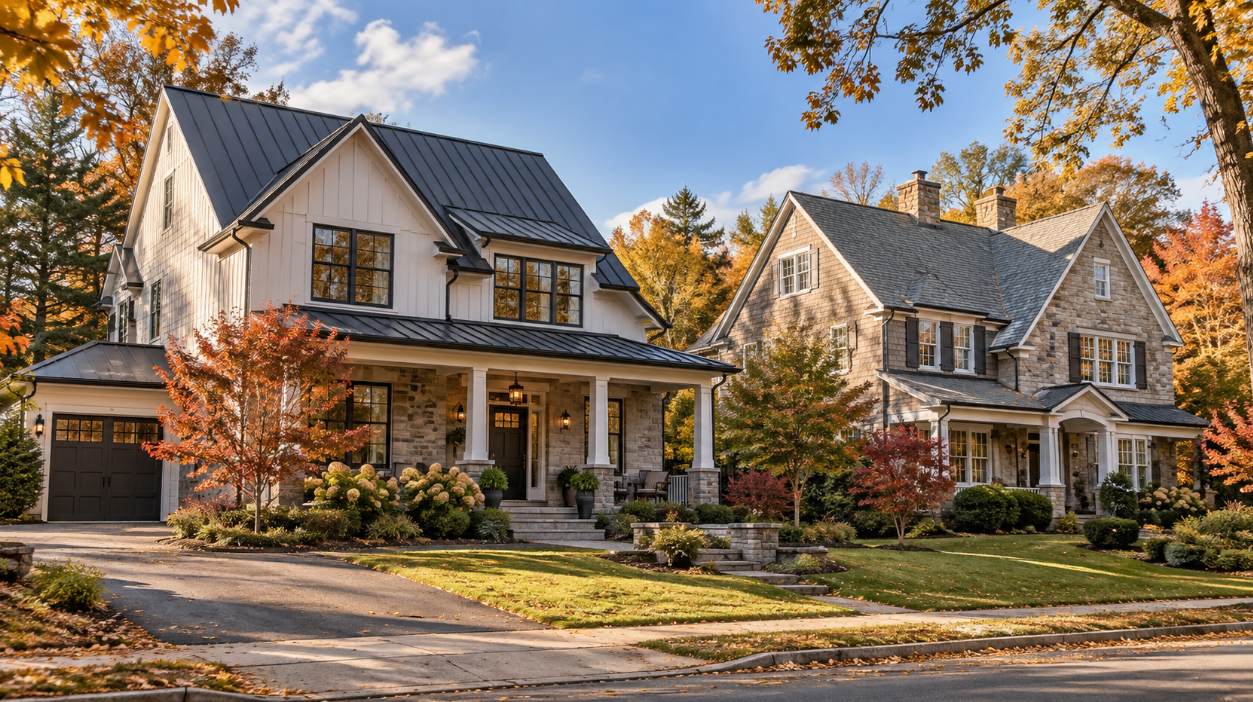
Asphalt shingles cost two to three times less to install and last 20 to 30 years. A metal roof costs more upfront, lasts 40 to 70 years depending on the type, and handles wind, hail, fire and snow better. Shingles make sense on a tight budget or if you plan to sell within 15 years. Metal pays off for owners who stay long enough to skip at least one reroofing.
Metal Roof vs Shingles at a Glance
In a metal roof vs asphalt shingles comparison, the main difference comes down to price against lifespan. The table compares architectural asphalt shingles, the most common choice today, with residential metal roofing across the criteria homeowners ask about most.
Criterion | Architectural asphalt shingles | Metal roofing |
Installed cost per sq ft | About $4 to $8 | About $7 to $18, by type |
Typical lifespan | 20 to 30 years | 40 to 70 years (standing seam), 25 to 40 (exposed fastener) |
Wind resistance | Often rated 110 to 130 mph with proper nailing | Many systems rated 140 mph or more |
Hail resistance | Class 4 impact-rated lines available | Class 4 common; can dent without leaking |
Fire rating | Class A on most fiberglass shingles | Class A as a tested assembly |
Weight per 100 sq ft | About 250 to 400 lb | About 50 to 150 lb |
Maintenance | Replace lost shingles, watch for granule loss | Check fasteners and sealants, touch up scratches |
Energy efficiency | Absorbs more heat unless cool-rated | Reflects more sunlight, especially light colors |
Rain noise indoors | Quiet | Similar to shingles over a solid deck |
Finish or material warranty | 25 to 50 years, limited | 30 to 40 years on paint finish, varies by maker |
All prices are national ranges for 2026 and shift with roof size, pitch, and local labor rates.
Metal Roof vs Shingles Cost
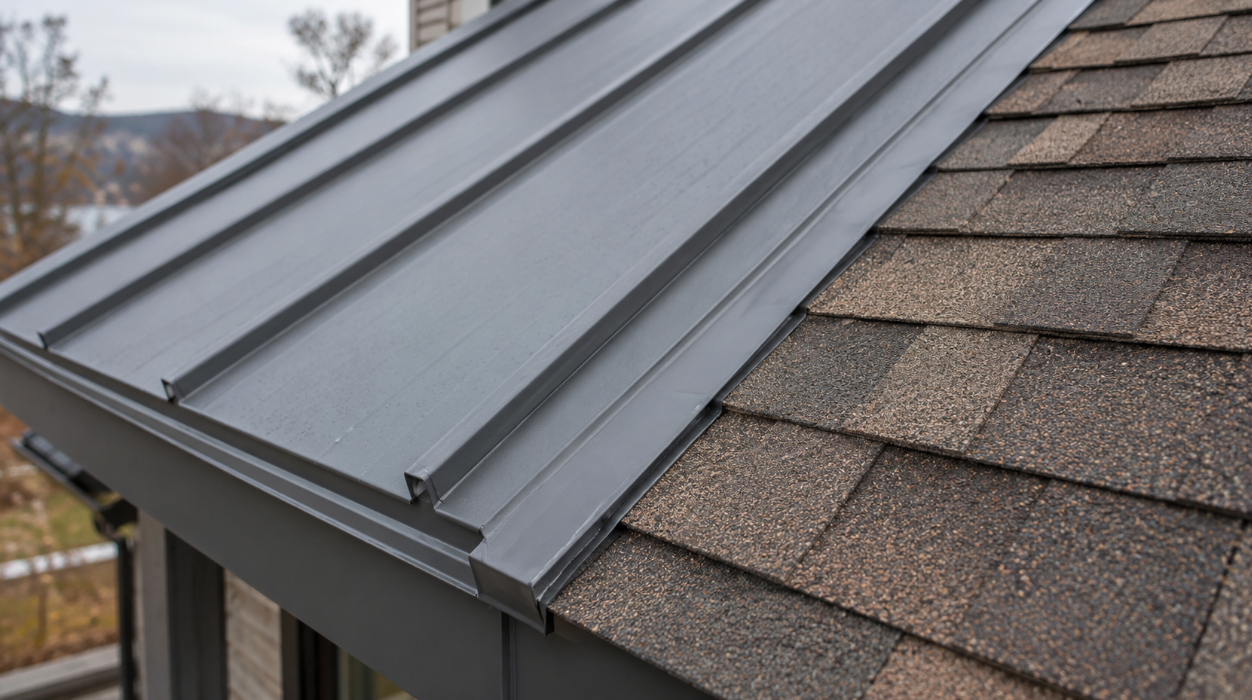
The cost of metal roof vs shingles looks very different depending on whether you count only the installation bill or the full time you own the house. Both views matter, and the right one for you depends on how long you plan to stay.
Upfront Installed Cost
For a typical 2,000-square-foot roof, architectural shingles usually run $9,000 to $16,000 installed. Metal on the same roof ranges from about $15,000 for exposed-fastener steel panels to $34,000 or more for standing seam. Tear-off of the old roof, new underlayment and flashing are included in most quotes, and the roof replacement cost guide breaks down what else affects the final number.
Cost per Year of Service
When you compare metal roof cost vs shingles per year of service, the gap narrows sharply. The example below uses the same 2,000-square-foot house.
Architectural shingles | Standing seam metal | |
Installed price | $12,000 | $26,000 |
Expected lifespan | 25 years | 50 years |
Cost per year of service | $480 | $520 |
Reroofing within 50 years | Once, at today’s prices or higher | Not expected |
On paper, the yearly cost is close. In practice, the second shingle replacement will cost more than the first because of inflation, and each tear-off adds disposal fees and disruption. Metal comes out ahead only if you stay in the house long enough to avoid that second replacement, which is why ownership horizon decides the math.
What Changes the Price of Each Material
Metal prices move with the profile, the metal (steel, aluminum, or copper), the panel thickness, and the paint system. Standing seam costs more than exposed-fastener panels because the seams are formed on site and the clips hide every fastener. Shingle prices depend mostly on the product line, with impact-rated and designer shingles costing 20% to 50% more than standard architectural ones.
Roof shape affects both. Every valley, dormer, skylight, and chimney adds cutting and flashing work, and metal panels need more labor at each of these details than shingles do.
Lifespan and Durability
Durability is where metal holds the clearest advantage, though modern shingles have narrowed part of the gap.
How Long Each Roof Lasts
Three-tab shingles last about 15 to 20 years, and architectural shingles last 25 to 30 in a moderate climate with good attic ventilation. Standing seam metal commonly lasts 40 to 70 years. Exposed-fastener panels last 25 to 40 years, but their rubber-washer screws usually need tightening or replacement every 10 to 20 years to prevent leaks.
Wind and Hail Resistance
Many standing seam systems are tested for winds above 140 mph because the panels interlock and have no exposed edges for wind to lift. Shingles resist wind through sealant strips and nailing, so an installation error or an old, brittle shingle can let a storm peel off whole sections.
For hail, both materials come in Class 4 impact-rated versions, the highest rating under the UL 2218 test. Impact-resistant shingles such as some GAF lines are a lower-cost option in hail-prone areas. Metal rarely cracks or leaks from hail, but large stones can leave dents, and many insurers treat those dents as cosmetic and exclude them from hail damage coverage.
Fire Resistance
Metal does not burn, and most metal assemblies earn a Class A fire rating. Most fiberglass asphalt shingles also carry Class A, so the difference in fire rating between the two is smaller than many homeowners expect. Metal still resists embers better, because nothing on its surface can ignite.
Metal Roof vs Shingles in Cold and Snowy Climates
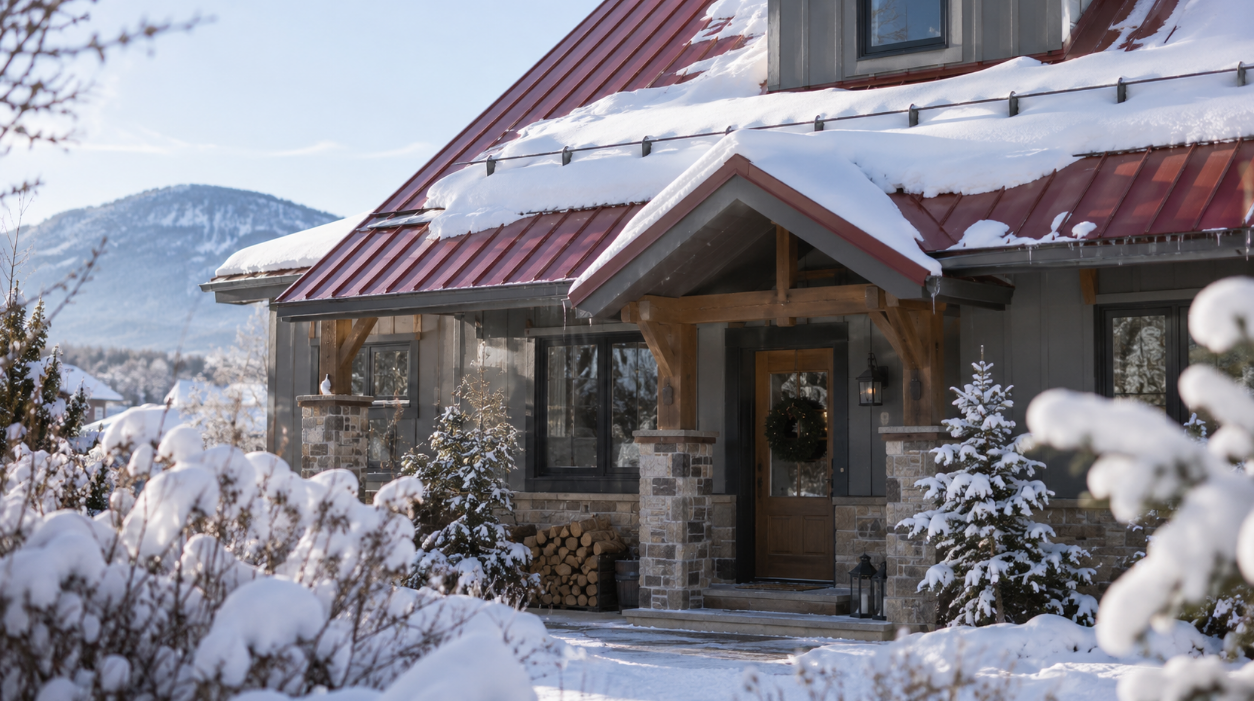
A metal roof sheds snow, while a shingle roof holds it. In Pennsylvania, New Jersey and other snowy regions, that one difference shapes most of the winter trade-offs.
Snow slides off smooth metal in large sheets once the sun or attic heat warms the panels. This keeps weight off the structure and reduces ice dams at the eaves, but a sliding sheet can damage gutters, bury shrubs, or fall on someone standing below. Snow guards above entrances, walkways, and lower roofs solve this and should be part of any metal quote in a snowy area.
Shingles hold snow in place, which protects the ground below and puts more weight on the roof for longer. When attic heat melts that snow unevenly, water refreezes at the cold eaves and forms ice dams that can push water under the shingles. Ice and water shield along the eaves is required by code in most cold regions for this reason.
Repeated freezing and thawing also ages shingles faster, as the effect of freezing temperatures on roofing shingles shows. Metal is not affected by freeze cycles, but warm, moist indoor air can condense on the underside of cold panels. A synthetic underlayment and balanced attic ventilation prevent that moisture from reaching the deck.
Energy Efficiency, Noise, and Appearance
Beyond cost and durability, three practical questions come up in almost every comparison.
Energy Efficiency
Metal roofing with reflective paint bounces back more sunlight than dark shingles, which lowers attic temperatures and summer cooling costs. The effect is strongest in hot, sunny climates and with light colors. In heating-dominated regions like the Mid-Atlantic, the yearly savings are smaller, and insulation and ventilation matter more than the roof surface. Cool-rated shingles with reflective granules close part of the gap.
Rain Noise
Installed over solid plywood or OSB with underlayment, a metal roof sounds about as quiet indoors as a shingle roof. The deck and attic insulation absorb the impact of the rain. The loud rain drumming people associate with metal comes from panels fastened over open purlins, as on barns and sheds.
Curb Appeal and HOA Rules
Shingles come in a wide range of colors and dimensional profiles, and they match the look of most neighborhoods. Metal offers standing seam, panels, and stamped shingles that imitate slate, shake, or tile. Some homeowner associations and historic districts restrict metal roofs or specific profiles, so check the rules before you request quotes.
Types of Metal Roofing Compared With Shingles
Most metal roofing vs shingles comparisons treat metal as a single product. In reality, the price and lifespan spread between metal types is often larger than the difference between metal and shingles. Because most residential metal roofs are steel, a steel roof vs shingles comparison covers the majority of homes, but the profile of that steel matters even more.
Standing Seam
Standing seam panels lock together at raised seams, and clips underneath hold them to the deck, so no fasteners are exposed to the weather. This design gives 40 to 70 years of service with very little maintenance. It is also the most expensive metal option and performs best on simple roof shapes with few valleys and dormers.
Exposed-Fastener Panels
Corrugated or ribbed steel panels are screwed straight through the face into the deck. They carry the lowest price of any metal roof and last 25 to 40 years, provided the rubber-washer screws are tightened or replaced every 10 to 20 years. You see them most often on farmhouses, barns, and outbuildings.
Metal Shingles and Stone-Coated Steel
Stamped steel or aluminum is shaped to look like shingles, shake or tile, and many products carry a granular stone coating. These systems suit homeowners who want metal durability with a traditional look that blends into the neighborhood.
Aluminum and Copper
Aluminum does not rust, which makes it the usual choice near salt air along the coast. Copper can last a century but costs several times as much as steel, so it appears mainly on premium homes, bay windows, and historic restorations.
Architectural asphalt shingles sit below all of these in upfront price and lifespan. For a wider look at materials beyond these two, see the overview of roof types.
Metal Roof or Shingles – Which Should You Choose?
How long you plan to own the house decides most cases. If a second shingle replacement would fall inside your ownership, metal usually costs less overall. If you plan to sell within 10 to 15 years, shingles return more of their price.
Choose metal if:
- You plan to stay in the home for 20 years or longer.
- Your area sees high winds, heavy snow or frequent hail.
- The roof has a simple shape with few valleys and penetrations.
- You plan to add solar panels, which clamp to standing seams without drilling.
- You want the lowest maintenance over several decades.
Choose shingles if:
- Your budget for the project is fixed and close to the shingle price.
- You expect to sell the house within 10 to 15 years.
- The roof has many valleys, dormers, or skylights that raise metal labor costs.
- Your HOA or historic district limits metal roofing.
- You want the widest choice of local contractors and the fastest repairs.
When you are ready to price both options on your own house, a roof replacement estimate with side-by-side quotes gives you the real numbers.
Frequently Asked Questions
Short answers to the questions homeowners ask most often when comparing the two materials.
Can a metal roof be installed over shingles?
Many building codes allow a metal roof over one layer of existing shingles if the deck is sound and the shingles lie flat. Installers often add furring strips or a new underlayment to create a smooth, ventilated base. Tearing off the old roof costs more but lets the contractor inspect and repair the deck.
Does a metal roof attract lightning?
No, metal roofing does not make a house more likely to be struck by lightning. Height and location matter far more than roof material. If lightning does strike, a metal roof spreads the energy and will not catch fire.
Is a metal roof louder than shingles in the rain?
Over a solid deck with underlayment and attic insulation, a metal roof sounds about the same as shingles from inside the house. The loud drumming effect happens only when panels are fastened over open framing without a deck.
Does a metal roof lower homeowners insurance?
Some insurers offer discounts for Class 4 impact-resistant roofs, and many metal roofs qualify. Discounts are most common in states with frequent hail and vary by company. Ask your insurer before choosing a material, and check whether the policy excludes cosmetic dents on metal.
Does a metal roof increase resale value?
A metal roof can make a house more attractive to buyers because of its long remaining life. The higher upfront price, however, is rarely returned in full at sale. The age and condition of the roof usually matter more to buyers than the material itself.
How much more does a metal roof cost than shingles?
Metal typically costs two to three times as much as architectural shingles on the same roof. Exposed-fastener steel sits at the low end of that range, and standing seam or copper sits at the high end.
Key Takeaways
Shingles cost less upfront and suit shorter ownership or a tight budget. Metal costs two to three times more but can outlast two shingle roofs, resists wind and fire better and sheds snow. The type of metal changes the comparison as much as the material choice does, and in snowy areas a metal roof should include snow guards. If you plan to stay long enough to avoid a second reroofing, metal usually wins on total cost.

Comments