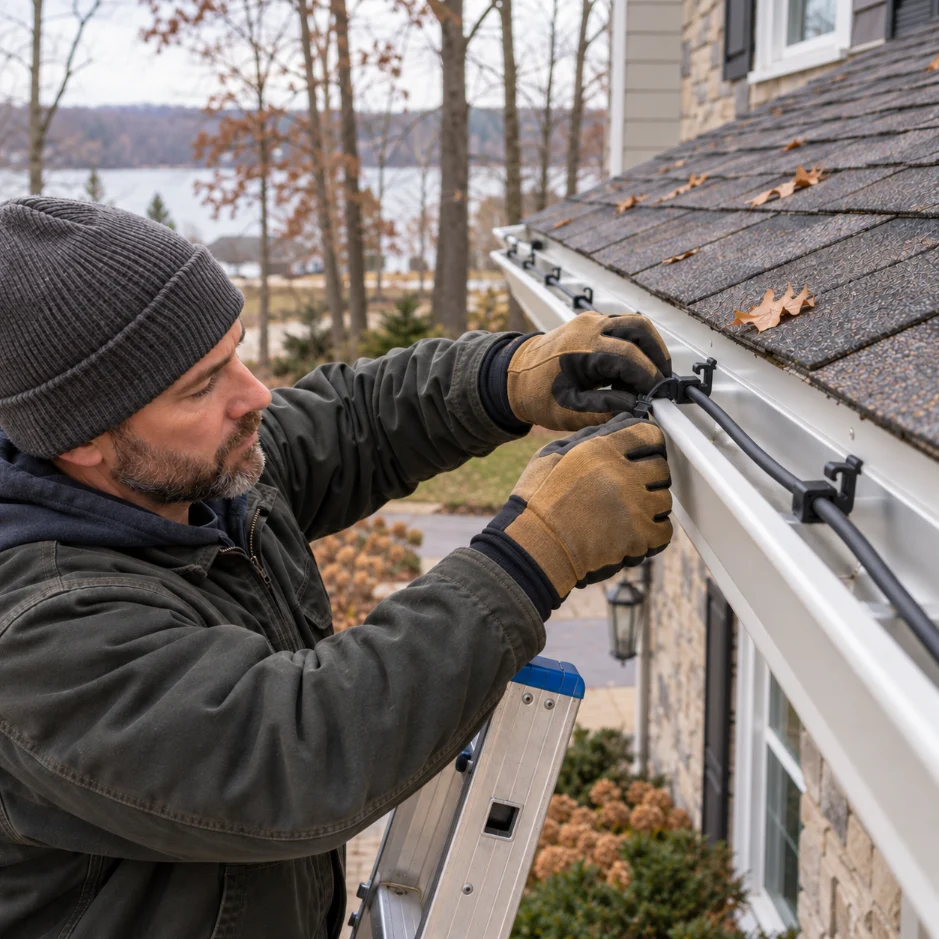
Heat tape for gutters works as a drainage aid. The cable keeps an open channel through the gutter and downspout so meltwater can leave the roof instead of freezing at the edge. It does not remove the cause of ice dams. For most homes, the right choice is a self-regulating roof and gutter cable rated about 5 watts per foot, plugged into a ground-fault-protected outlet. Running 100 feet of it around the clock costs about $2 a day at Pennsylvania electricity rates.
Does Heat Tape in Gutters Work?
Yes, for keeping water moving. A heated gutter and downspout stay open during a freeze, so meltwater from the roof drains to the ground instead of backing up at the eave. This matters most where the gutter freezes solid before the roof finishes melting.
Heat tape does not melt the snow on the roof, and it does not stop an attic from warming the roof deck. If heat escaping from the house is creating the ice, the cable only keeps a narrow path open while the ice keeps building beside it. Our guide on [how to prevent ice dams on your roof](URL статьи про наледь) covers the attic fixes that stop the ice at its source.
So can you put heat tape in gutters on any house and expect it to pay off? The cable earns its cost in a few specific places. Typical cases are a north-facing or shaded gutter and a downspout that freezes every winter. Others are a roof valley that dumps water into one corner and a low-slope porch roof that meets a wall. If ice forms along the entire length of the eave, the problem is heat loss, and air sealing and insulation should come first. Sagging gutters that hold standing water also need gutter repair before any cable goes in.
Which Heat Tape to Buy and How Much You Need
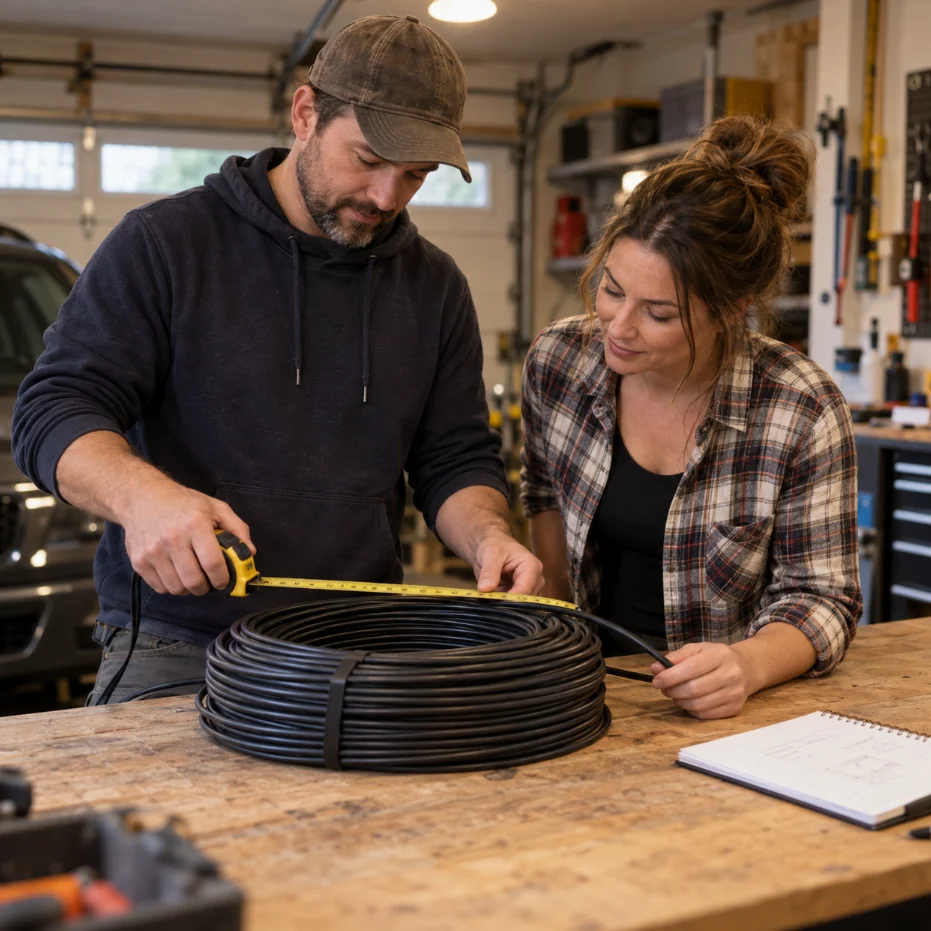
Roof heat tape and gutter heat cable come in two types: self-regulating and constant-wattage. The table compares them.
Self-regulating cable | Constant-wattage cable | |
Heat output | Rises in ice and drops as the cable warms, about 5 W/ft at 50°F and up to 8 W/ft in ice | Fixed output along the whole length |
Cut to length | Yes, then sealed with an end kit | No, sold in fixed-length kits |
Overlap or crossing | Allowed by most manufacturers | Not allowed, the cable must never touch itself |
Typical warranty | Often 10 years | Often 3 years for plug-in kits |
Upfront price | Higher | Lower |
Best use | Gutters, downspouts, and any run longer than a short kit | A short stretch of roof edge on a tight budget |
The best heat tape for gutters is a self-regulating cable listed for roof and gutter de-icing. As a heating cable for gutters and downspouts, it is the safer and more efficient pick. It can run down a downspout and back up in a loop, which a constant-wattage cable usually cannot do without touching itself.
To size the cable, add up each part of the run. Manufacturer guides such as Easy Heat’s use these allowances: 1 foot of cable per foot of gutter, with two runs if the gutter is wider than 6 inches. Each downspout takes 2 feet of cable per foot of height, because the cable goes down and loops back up. A roof valley adds about 6 feet.
The roof edge zigzag uses a multiplier based on the overhang. On a shingle roof, the Easy Heat chart lists a factor of 1.9 for a 12-inch overhang and 2.7 for a 24-inch overhang.
For example, a house with 40 feet of standard 5-inch gutter and two 10-foot downspouts needs 40 + 40 = 80 feet of cable. Adding a zigzag on a 20-foot shaded section of roof with a 12-inch overhang brings the total to about 118 feet.
How to Install Heat Tape in Gutters and Downspouts
The steps below follow the order a roofer or electrician uses when installing heat tape for roofs and gutters. Read the instructions for your specific cable first, since spacing, clips, and sensors differ by brand.
Step 1: Check the Outlet and Circuit
Section 426.28 of the National Electrical Code requires ground-fault protection for outdoor deicing equipment. Plug-in kits go into an outdoor GFCI outlet near the eave, and hardwired cables connect to a ground-fault-protected circuit. Never use an extension cord. A damaged cable may not trip a standard breaker, which is why this protection matters.
Step 2: Clean the Gutters
Remove leaves, needles, and shingle grit before the cable goes in. Debris packed around the cable holds water and keeps the heat from reaching the ice. Gutter guards usually have to come off because the cable needs direct contact with the gutter trough to work.
Step 3: Run the Cable Along the Gutter and Down the Downspout
Lay the cable flat along the bottom of the gutter. Feed it down each downspout to the outlet and loop it back up, so the whole pipe stays warm and meltwater does not refreeze at the bottom. Keep the cable away from sharp gutter seams and hanger edges that could cut the jacket.
Step 4: Add a Zigzag on the Roof Edge Only Where Ice Builds
A zigzag on the roof makes sense only on the trouble spots identified earlier: shaded runs, valleys, and the low edge beside a dormer. The triangles should reach up past the line of the exterior wall, since the overhang beyond it is the coldest part of the roof. Covering the whole eave raises the electric bill without much benefit.
Step 5: Secure the Cable With the Manufacturer’s Clips
Use the roof clips sold for the cable. On asphalt shingles, they slide under the shingle tabs. Never drive nails, staples or screws through the cable, and seal any fastener that has to go through the roof, fascia or gutter. Damaged shingles from earlier installs should get roof repair before new cable goes on.
Step 6: Use Seam Clamps on a Metal Roof
Heat tape for metal roofs attaches with clamp-on clips that grip the standing seams, so the panels never get drilled. Snow slides off metal in sheets and can tear a cable loose. Many installers place snow guards upslope of the cable to protect it.
Step 7: Test the Cable and Add a Controller
Turn the cable on before the first snow and confirm it warms along its full length. A controller with a temperature and moisture sensor switches the cable on only when snow or ice is present near freezing. Some manufacturers of self-regulating cable list such a sensor as a required part of the system.
How Much It Costs to Run Heat Tape

The cost to run heat tape depends on four numbers: watts per foot, length in feet, hours of use, and your electricity rate. Multiply watts by feet and divide by 1,000 to get kilowatts. Then multiply by hours and by the rate per kilowatt-hour.
For example, 100 feet of cable at 5 watts per foot draws 500 watts, or 0.5 kilowatts. Pennsylvania’s average residential rate was about 18.4 cents per kilowatt-hour in 2025, according to the U.S. Energy Information Administration. At that rate the cable costs about 9 cents an hour and about $2.20 a day if it runs nonstop. Output and cost climb when a self-regulating cable is sitting in ice.
A sensor controller lowers the bill the most. It runs the cable only during snow and freezing conditions, so most winter days cost nothing.
Why Heat Tape Stops Working and How to Fix It
Most heat tape problems show up in the first cold snap and trace back to how the cable was installed or when it was switched on. The four cases below are the ones homeowners run into most often.
The Outlet Keeps Tripping
Ground-fault protection cuts power when current leaks out of the cable. The usual cause is a nick in the outer jacket from a gutter seam, a clip or a nail, which lets water reach the wires. Unplug the cable and walk the full run looking for cuts and flattened spots. A damaged section has to be replaced or repaired with the manufacturer’s splice kit. Resetting the outlet again and again leaves the fault in place.
The Gutter Is Still Full of Ice
Heat tape keeps a channel open in a gutter that starts out clear, and it melts a solid block of existing ice very slowly. Turn the cable on before the first snow, or set the controller to start it automatically in freezing weather. A gutter wider than 6 inches needs two runs of cable, since a single run leaves ice along the far side of the trough.
The Downspout Freezes at the Bottom
Ice at the bottom of the downspout means the cable stops short of the outlet. Meltwater runs down the heated part of the pipe, freezes in the last unheated stretch and backs up into the gutter. Extend the cable to the bottom opening and loop it back up, allowing 2 feet of cable per foot of downspout.
Ice Builds Up on the Roof Above the Cable
Ice on the shingles above the zigzag shows the triangles stop too low. Water refreezes on the first cold shingle it reaches, so the heated area has to extend past the line of the exterior wall. If ice forms along the whole roof edge, including stretches with no cable at all, warm air from the attic is the cause, and air sealing and insulation are the fix.
FAQ
What can you use to keep gutters from freezing?
A self-regulating heat cable in the gutter and downspout is the most reliable way to prevent frozen gutters and downspouts. Clean gutters with a proper slope toward the downspout freeze less often. If ice forms along the whole eave, fixing attic heat loss does more than any product in the gutter.
Can you leave heat tape on all winter?
You can, but a controller is the better choice. Manufacturers allow plug-in kits to stay connected through the winter, but they advise unplugging them for the rest of the year. A sensor that switches the cable on only in snow and freezing weather cuts both the bill and the wear on the cable.
Is heat tape a fire hazard?
A listed roof and gutter cable on a ground-fault-protected circuit carries low risk when installed to the instructions. Fire risk comes from overlapped constant-wattage cable, cuts in the outer jacket, extension cords and cable buried in dry leaves. Inspect the cable each fall before turning it on.
Can heat tape damage shingles?
The cable itself is designed to touch asphalt shingles. Damage comes from fasteners driven through the roof, clips forced under brittle cold shingles and cable pulled loose by sliding snow. Install the clips in mild weather and use only the clips made for your cable.
Can you put heat tape under gutter guards?
Most manufacturers say no, because leaf guards typically have to come off so the cable can sit in the gutter trough. Some guard systems include a channel for a heat cable, so check with the guard maker first. This overview of gutter guards explains the main guard types.
How long does gutter heat tape last?
Warranties give the best guide. Plug-in constant-wattage kits often carry a 3-year warranty, and self-regulating cables are commonly warranted for 10 years. Actual life depends on sun exposure, snow load and how carefully the cable was installed.

Comments