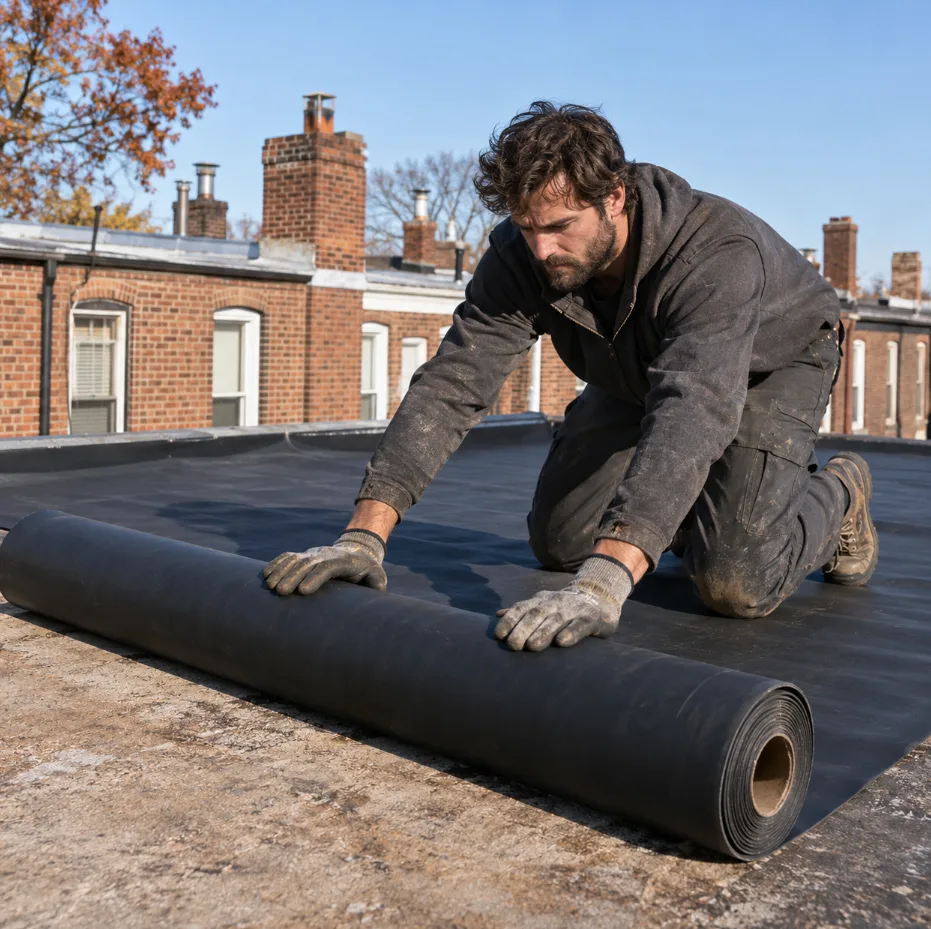
For most homes and small commercial buildings, the best material for a flat roof is a single-ply membrane: EPDM rubber or a white 60-mil TPO. Both cost roughly $4 to $14 per square foot installed, last 15 to 30 years or longer, and can be patched without tearing off the whole roof. EPDM wins in cold climates and on tight budgets, while white TPO wins where hot summers drive up cooling bills.
Other flat roof materials beat them in specific cases. PVC suits restaurants and any roof that collects grease or chemicals. Modified bitumen fits the smallest budget and roofs that people walk on often. Spray polyurethane foam makes sense when the roof also needs a thick layer of insulation.
Flat Roof Materials Compared
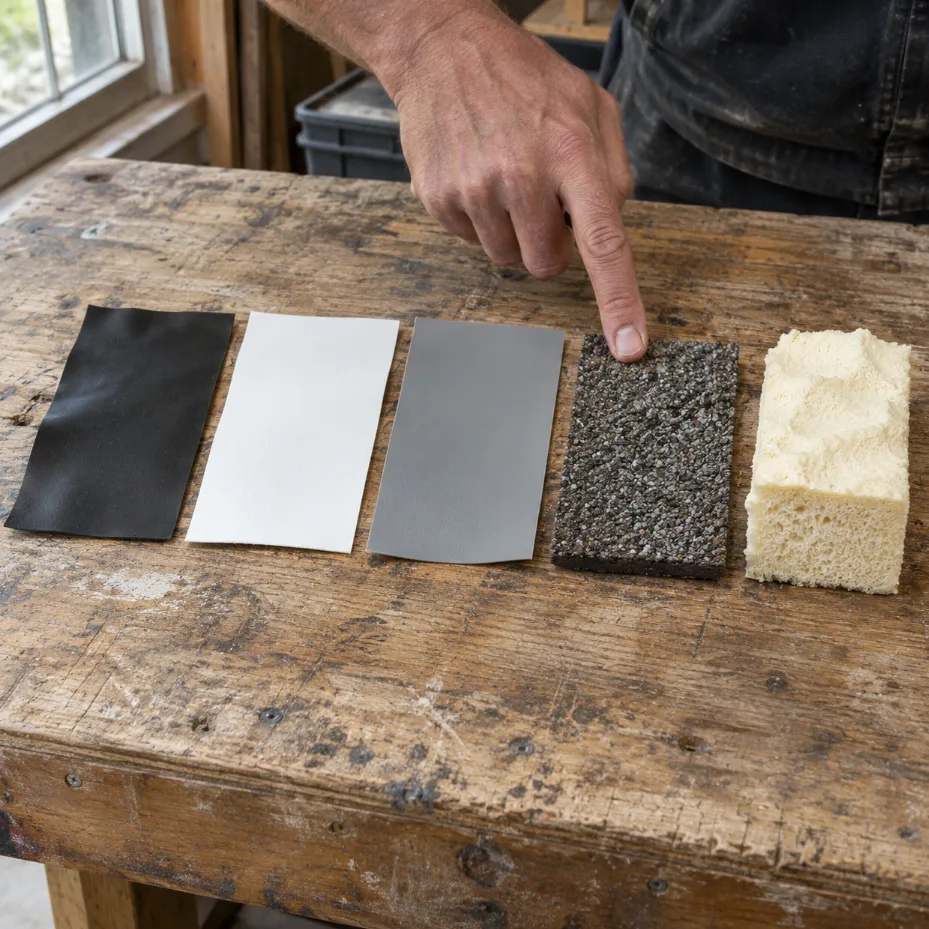
Six materials cover almost every flat roof in the U.S. They differ in lifespan, installed price, and how they handle sun, frost and standing water. The table includes an approximate cost per year of service, which shows the real price of a roof better than the installation quote alone. Our page on commercial roof types covers the systems Paramount installs on larger buildings.
| Material | Lifespan | Installed cost per sq ft | Approx. cost per year of service | Best for | Main weakness |
|---|---|---|---|---|---|
| EPDM rubber | 30–50 years | $4–$13 | $0.21 | Cold climates, long service life | Punctures from foot traffic |
| TPO | 15–30 years | $4–$14 | $0.40 | Hot summers, energy savings | Quality varies by brand |
| PVC | 20–30 years | $5–$16 | $0.42 | Restaurants, chemical exposure | Highest price of the membranes |
| Modified bitumen | 15–30 years | $4–$8 | $0.27 | Low budgets, foot traffic | Dark surfaces absorb heat |
| Built-up roofing (tar and gravel) | 15–30 years | $4–$10 | $0.31 | Durable multi-layer protection | Heavy, slow to install |
| Spray polyurethane foam | 30–40 years with recoating | $4–$7 | $0.16 | Added insulation, irregular roofs | Coating renewal every 5–8 years |
Cost per year uses the midpoint of each price and lifespan range. The foam figure leaves out the recoating, which adds to its real long-term cost.
Rolled roofing appears on many sheds and porches because it costs only $2 to $5 per square foot. It usually lasts 5 to 10 years, which makes it the most expensive option per year of service and a poor choice for the main roof of a house.
The Best Flat Roof Material for Each Situation
The best material changes with what a roof needs most: low upfront cost, long life, cold-weather performance or a surface people can walk on. The sections below name the strongest choice for each case.
Best Overall – EPDM and TPO
EPDM and TPO cover the widest range of flat roofs at a moderate price. EPDM is a synthetic rubber that stays flexible through seasonal temperature swings and patches easily. TPO comes in white, reflects most of the sunlight that hits it and has heat-welded seams, which makes it the stronger pick for roofs that bake in summer. On a typical flat-roofed home or addition, either one installed by an experienced crew gives 15 to 30 years or more of service with little maintenance.
Cheapest – Modified Bitumen
Modified bitumen costs about $4 to $8 per square foot, the lowest price among complete flat roof systems. It consists of asphalt sheets reinforced with rubber or plastic polymers and finished with a granule surface. Self-adhered and cold-applied versions go down without an open flame, which matters on attached rowhomes where a torch would work close to a neighbor’s roof.
Longest Lasting – EPDM
EPDM has the longest documented track record among flat roof membranes. Carlisle SynTec, one of the largest manufacturers, reports EPDM service lives of 40 years or more on well-installed roofs, and some estimates reach 50 years. Spray foam can match that range only when its protective coating is renewed every 5 to 8 years.
Best for Cold Climates – EPDM and SBS Modified Bitumen
EPDM flexes more than TPO and handles freeze-thaw cycles without cracking. Among asphalt membranes, SBS modified bitumen stays more flexible in the cold than the APP type, so roofers prefer it in northern regions. If you choose TPO in a cold climate, specify at least 60 mil, since thinner sheets lose flexibility in deep cold as they age.
Best for Foot Traffic and Rooftop Decks
Modified bitumen with a granule surface handles foot traffic, punctures and hail better than most membranes. Unreinforced EPDM punctures more easily than TPO or PVC when people walk on it or drop tools. On any membrane roof that someone crosses more than once a month, manufacturers call for walkway pads along the route, especially around roof hatches and rooftop equipment.
Best for Restaurants – PVC
PVC resists grease, oils and many chemicals better than EPDM or TPO. That makes it the standard choice for restaurants, food plants and buildings whose exhaust fans vent kitchen grease onto the roof. It also has heat-welded seams and a white, reflective surface.
How to Choose a Flat Roof Material
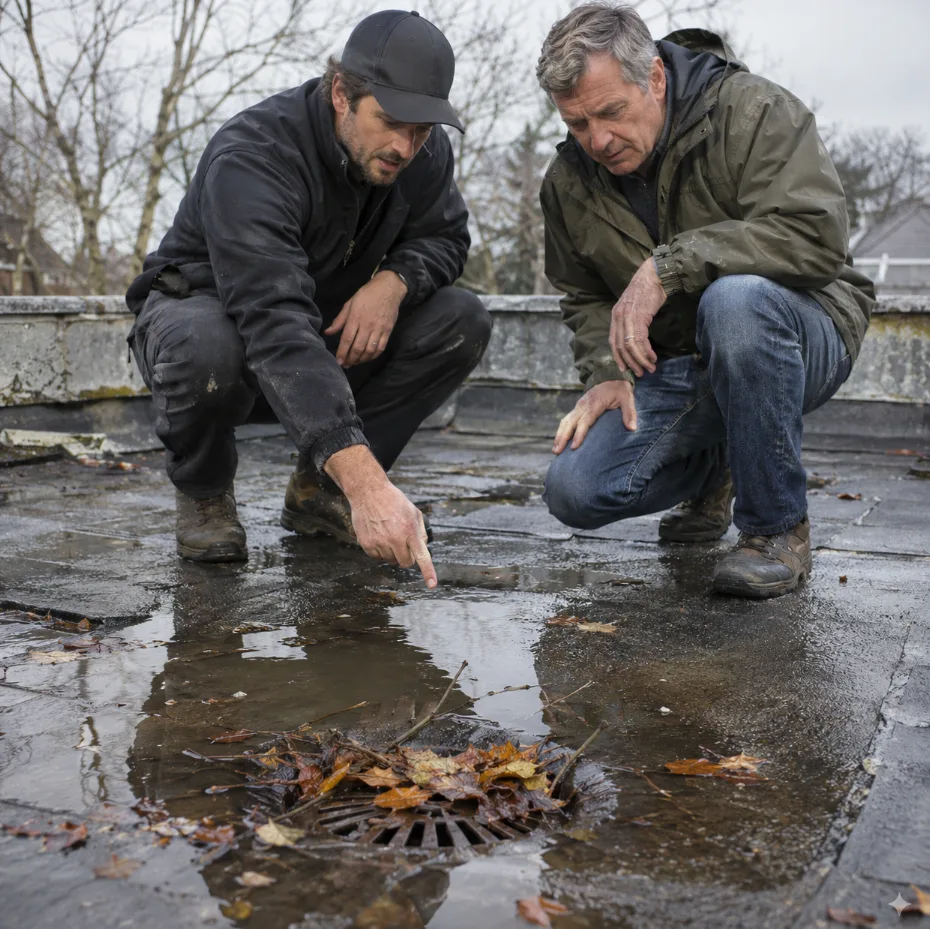
Four questions narrow the choice for almost any flat roof.
- What is the climate?
- How will the roof be used?
- What will the roof cost per year?
- What kind of building sits below it?
Climate decides first. Long, hot summers favor white TPO, PVC or foam, while cold winters favor EPDM or SBS modified bitumen. Use comes next: a roof with a deck, HVAC units or regular service visits needs a tougher surface or walkway pads.
Budget should be measured over the whole service life. A $4 roof that lasts 8 years costs more per year than a $9 roof that lasts 40. The building itself adds limits as well. Attached houses favor flame-free installation, and heavy built-up roofs may exceed what an older structure can carry. Every flat roof also needs a slope of at least 1/4 inch per foot so water drains instead of ponding.
Installation quality outweighs every other factor. Seams, flashings around chimneys and vents, and drainage details cause most flat roof leaks, whatever the material.
Frequently Asked Questions
What is the most durable material for flat roofing?
EPDM rubber lasts the longest, with documented service lives of 40 years or more on well-installed roofs. Modified bitumen resists punctures and foot traffic best. Spray foam can last 30 to 40 years when its coating is renewed every 5 to 8 years.
What is the cheapest material for a flat roof?
Rolled roofing has the lowest upfront price at $2 to $5 per square foot, but it typically lasts only 5 to 10 years. Modified bitumen at $4 to $8 per square foot gives the lowest cost among systems built to last 15 years or more.
What are the three types of flat roofs?
The three traditional types are built-up roofing, modified bitumen and rubber membrane roofing. Today the membrane group includes EPDM, TPO and PVC, and spray foam adds a fourth option.
Which flat roof is best for heavy rain?
A roof with few seams and good drainage handles heavy rain best. Fully adhered EPDM and heat-welded TPO or PVC give the most watertight surfaces. The roof deck also needs a slope of at least 1/4 inch per foot toward drains or gutters.
What is the most common flat roof material?
Single-ply membranes (EPDM, TPO and PVC) cover about 75% of low-slope roofs in North America. On homes, modified bitumen and EPDM are the most common choices for porches, additions and rowhome roofs.
Can you walk on a flat roof?
Yes, most flat roofs handle occasional foot traffic for inspections and maintenance. For regular traffic or a rooftop deck, choose modified bitumen or add walkway pads over a membrane, because repeated steps and dropped tools can puncture EPDM.
Choosing the Best Material for Your Flat Roof
For most homes, EPDM or white 60-mil TPO makes the best material for a flat roof, with modified bitumen as the budget option and PVC for restaurants. The right pick within that list comes down to your climate, how often people go up on the roof and how many years you plan to own the building.
A roofer should check the deck, the slope and the drains before you choose, because a new membrane on a sagging or ponding roof will fail early. Paramount’s crews inspect flat roofs across Greater Philadelphia and handle full commercial roof replacement.

Comments