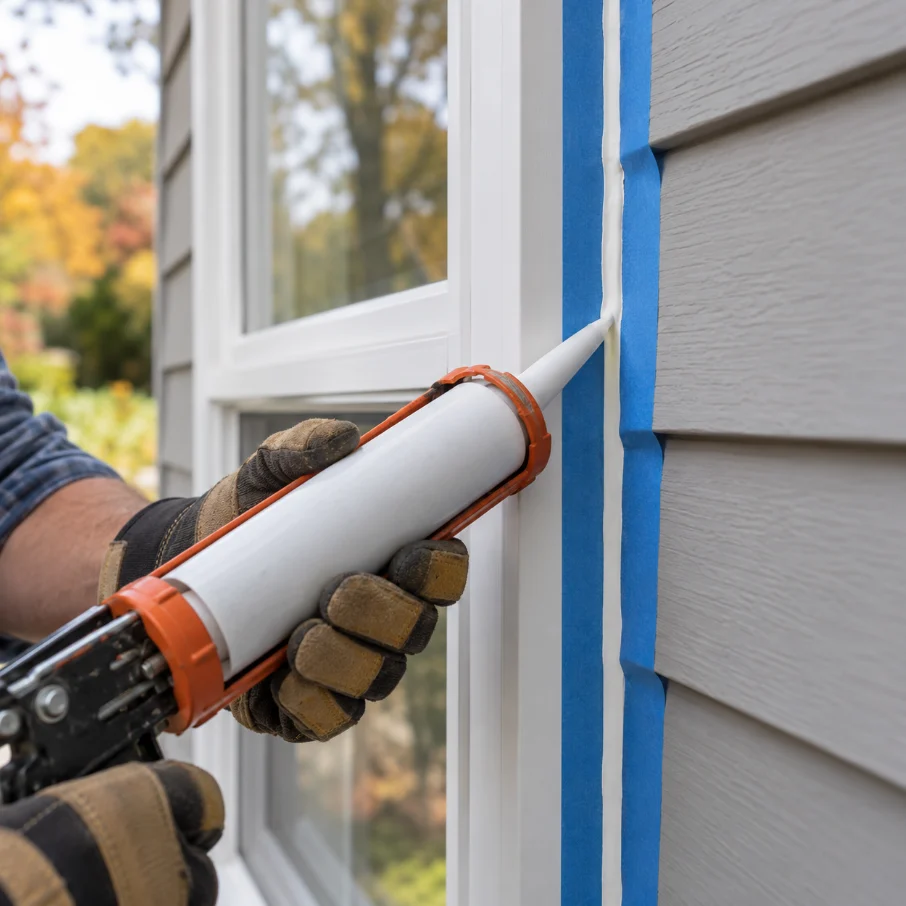
To reseal windows, cut out the old caulk where the frame meets the siding and trim, then clean and dry the joint. Lay a new bead of exterior window and door sealant on a dry day above 40°F. Joints deeper than 3/8 inch get a foam backer rod first. Inside, the same steps apply to the joint between the trim and the wall. Fog between the panes of a double-pane window comes from a failed factory seal in the glass unit, and the fix there is a new glass unit. One window takes about an hour once the old caulk is out.
Find Which Seal Failed
How to seal windows depends on which seal is leaking. A window has four of them: exterior caulk, interior caulk at the trim, weatherstripping between the sash and frame, and the factory seal of the glass unit. Match what you see to the table before you buy anything.
What you notice | Seal that failed | Fix |
Cracked, shrunken or missing caulk outside, dark streaks below the window | Exterior caulk | Reseal outside, steps below |
Draft along the edge of the interior trim | Interior caulk or the gap behind the trim | Caulk the trim, or seal behind it |
Draft between the sash and the frame with the window locked | Weatherstripping | Replace the weatherstripping |
Fog or droplets between the panes | Factory seal of the glass unit | Replace the glass unit |
Glazing putty cracking or falling out of an old wood sash | Glazing putty | Reglaze the sash |
Water on the sill during wind-driven rain while the caulk looks intact | Flashing behind the siding | Call a window contractor |
Weatherstripping, shrink film, and the rest of how to seal windows for winter are covered in our guide on [how to insulate windows for winter](URL статьи про утепление окон). The rest of this article deals with caulk, the seal most windows need first.
Choosing Caulk for Windows
The joint outside the window moves with every change in temperature, so it needs a flexible sealant. Pick 100% silicone or a paintable silicone labeled for windows and doors. Look for ASTM C920 on the label, followed by Class 25 or higher, which means the bead can stretch and compress by at least 25% without tearing. Pure silicone does not hold paint, so choose a paintable version if the trim gets painted.
Inside, the trim barely moves and almost always gets painted. Acrylic latex caulk with added silicone works here: it cleans up with water and takes paint. It needs temperatures above 40°F and can take 7 to 14 days to cure fully, according to DAP’s product guidance.
Gap size decides what goes in before the caulk. ENERGY STAR recommends caulk alone for gaps of 1/4 inch or less. Deeper joints get a foam backer rod, sized slightly larger than the gap, so the bead stays about half as deep as it is wide. Wide hidden gaps between the window frame and the wall framing take low-expansion foam made for windows and doors. Regular expanding foam can bow the frame and jam the sash.
How to Reseal Windows Outside
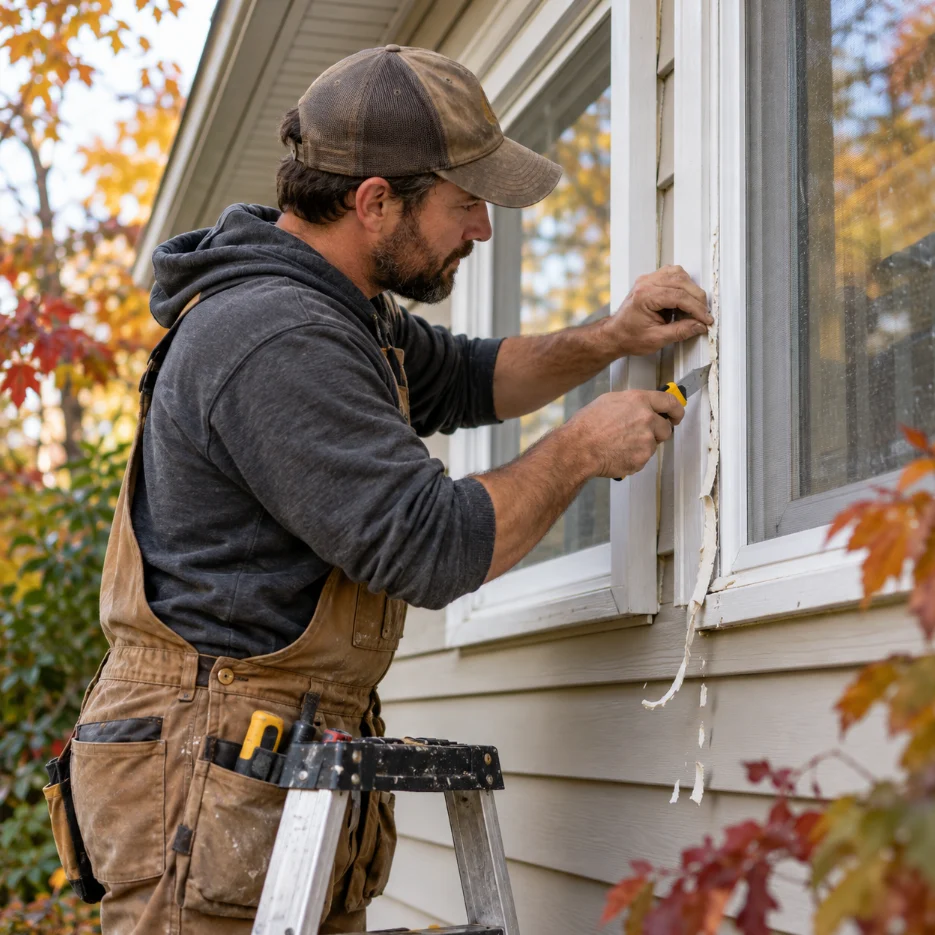
The steps below cover how to caulk windows on the outside, where most leaks start. Set aside a dry day and work one window at a time.
Step 1: Pick the Right Weather
Plan the job for early fall, on a day above 40°F with no rain in the forecast. Many silicone sealants can go on in colder air, but GE’s technical data shows their cure slows below 40°F, and acrylic caulks need warmer air. The joint and siding must be dry, so wait a day after rain or heavy dew.
Step 2: Remove the Old Caulk
Score both edges of the old bead with a utility knife, then pull it out in strips. A 5-in-1 tool or plastic scraper lifts stubborn sections, and a hair dryer softens hardened caulk. Remove all of it. A new bead laid over cracked caulk fails along the same crack, and most sealants will not bond to cured silicone.
If the house was built before 1978, the paint around the window may contain lead. Follow the EPA’s lead-safe practices, or hire a certified contractor, before scraping painted trim.
Step 3: Clean and Dry the Joint
Wash the joint with soapy water and let it dry fully. Wipe leftover silicone film with isopropyl alcohol on a rag. Check the siding and trim next to the window. If the wood is soft or the siding is cracked, repair it first; caulk will not hold on rotted material, and damaged boards need siding repair.
Step 4: Fill Deep Gaps With Backer Rod
Press foam backer rod into any joint deeper than 3/8 inch with a putty knife or blunt tool. Leave room for the caulk on top, about half the joint’s width in depth. Do not force oversized rod into the gap, since it can push on the frame and make the window hard to open.
Step 5: Apply the New Bead
Run painter’s tape along both sides of the joint for a clean line. Cut the nozzle at a 45-degree angle to match the width of the gap. Pull the gun along the joint in one steady pass, pushing caulk into the gap as you go. Smooth the bead right away with a caulk tool or a wet finger, and pull the tape before the surface skins over.
Step 6: Let It Cure Before Paint and Rain
Cure times vary by product, so follow the label. GE’s paintable silicone for windows and doors takes paint after 1 to 2 hours and reaches full cure in 24 to 72 hours at room temperature. Cold or dry air stretches all of these times.
How to Caulk Windows Inside
Inside the house, two joints need sealing: where the trim meets the wall and where it meets the window frame. Cut out any cracked caulk, wipe the joint, and apply a thin bead of paintable acrylic latex caulk. Smooth it, let it dry, and paint over it.
A draft that continues after the trim is caulked usually comes from the gap behind the trim, between the window frame and the wall framing. ENERGY STAR describes the fix: pry off the trim, fill the gap with low-expansion foam or backer rod, and nail the trim back. It rates the job moderate to difficult and estimates one to two days for a whole house. Trim with decorative sills or built-up profiles is easier to leave to a carpenter.
Where Not to Caulk Around Windows
Some openings around a window exist to let water out. Sealing them traps rain and condensation inside the frame or the wall, where it rots wood without showing on the surface. Leave the four places below open when you recaulk.
Weep Holes
Vinyl and aluminum windows have small slots along the bottom of the outer frame. They drain water that collects in the window track. To find them, pour a cup of water into the track and watch where it runs out on the outside. If a slot is clogged, clear it with a pipe cleaner and leave it uncaulked.
The Gap Above the Head Flashing
A thin metal drip cap runs along the top of most windows, tucked under the siding. Water that gets behind the siding runs down to this flashing and drains out over the window. Caulking the joint between the siding and the top of the drip cap holds that water inside the wall.
The Bottom of Exterior Storm Windows
Storm windows mounted outside the main window leave a small gap or a row of slots along the bottom edge. Rain and condensation trapped between the two windows drain through it. A storm window sealed along the bottom keeps the main sill wet and speeds up rot.
Moving Joints
Caulk only the fixed joints where the frame meets the siding or trim. The joint between the sash and the frame, and the tracks on sliding windows, have to move. Caulk there seals the window shut, and gaps in these spots call for new weatherstripping.
When Resealing Is Not Enough

Caulk closes gaps around a sound window. It cannot fix a window that has failed. Fog between the panes means the glass unit has lost its seal and its insulating gas, and only a new glass unit restores it. Soft, rotted wood at the sill or bottom rail spreads under fresh caulk.
Drafts that continue after new caulk and new weatherstripping usually point to a warped sash or a worn balance system. In those cases, compare the cost of repairs against window replacement. Current energy-efficient windows with low-E glass and insulated frames cut drafts at the source.
FAQ
How do you seal windows for winter?
Seal windows for winter in early fall, while temperatures stay above 40°F. Recaulk the outside joints where the frame meets the siding, caulk the interior trim, and replace worn weatherstripping on the sash. For drafty windows you plan to replace later, interior shrink film adds a temporary layer of insulation.
How much does it cost to reseal windows?
Doing it yourself costs a few dollars of caulk per window, plus $10 to $30 for a caulk gun and tools. HomeAdvisor puts professional window sealing at $50 to $70 per window, depending on size, frame material and access. Second-story windows and heavy prep raise the price.
How often should windows be resealed?
Check the caulk every fall and after major storms. Exterior caulk on sun-exposed sides wears out first and commonly needs replacing every 5 to 10 years, depending on the product and the climate. Replace any bead that has cracked, shrunk or pulled away from the frame.
Should you caulk windows inside or outside?
Both, for different reasons. Exterior caulk keeps rain out of the wall, and interior caulk stops warm room air from leaking around the trim. Seal the outside first, since water damage costs more to fix than drafts.
Can you caulk over old caulk?
It is a poor idea, because new caulk laid over a cracked bead breaks along the same line, and most sealants will not stick to old silicone. Remove the old caulk completely and clean off the residue before applying a new bead.
Can you reseal double-pane windows?
You can reseal the caulk around a double-pane window like any other. The factory seal between the panes cannot be restored at home. Once fog appears between the glass, a window company replaces the sealed glass unit and keeps the existing frame.

Comments